
2D & 3D nonlinear finite element software for advanced geomechanics.
High-performance numerical analysis built for complex soil-structure interaction, multiphysics coupling, and seismic response.
Built for the most demanding geomechanics challenges
Advanced analysis capabilities—explore interactive demos and snapshots.
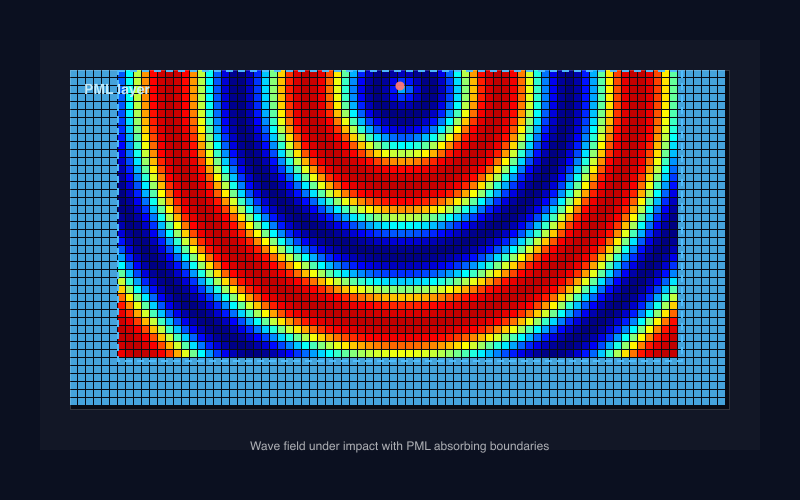
- Seismic site response with accurate wave transmission at boundaries (PML)
- Pore pressure generation during cyclic/earthquake loading
- Efficient explicit & IMEX schemes for robust performance in coupled dynamic simulations
- Seamless transition from dynamic shaking to long-term dissipation using Falcon’s implicit solver
- Updated Lagrangian large-deformation analysis with adaptive stepping and ALE smoothing
- Effective-stress-based coupling for precise strength and failure assessment under changing pore pressures
- Consolidation through full drainage with pore pressure tracking
- Unsaturated soil behavior with water and air phase coupling
- Multi-stage construction with advanced options for climatic influence inclusion
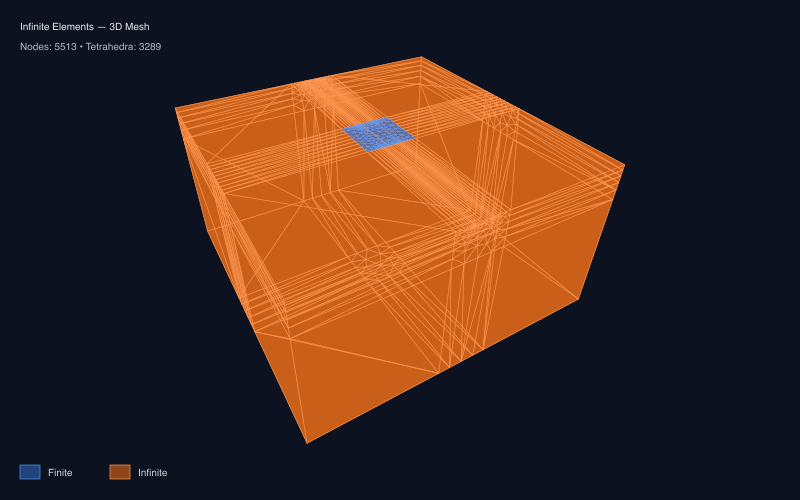
- Infinite elements for unbounded domains (static and consolidation)
- Realistic contact with effective-stress-based friction
- Drainage control at interfaces during loading and separation
- Optimal performance on non-conforming grids (non-matching meshes) at soil-structure boundaries
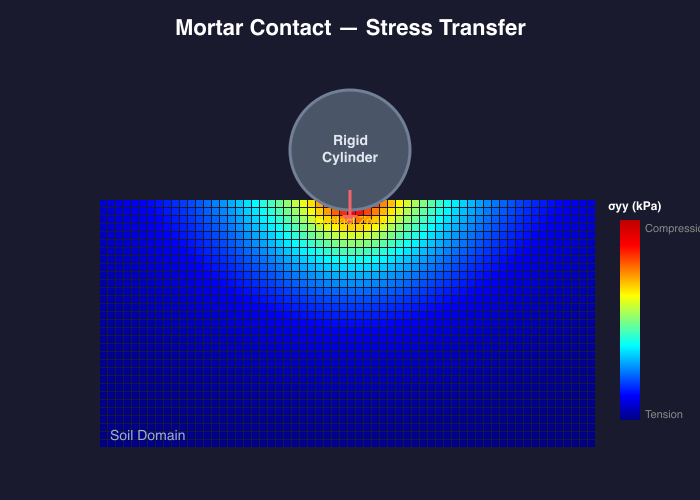
- Thermodynamically consistent effective-stress model for unsaturated soils—with control over strength attenuation toward dryness
- Mohr–Coulomb failure across the full saturation range (one criterion from dry to saturated) for problems where moisture changes matter—seasonal suction, wetting fronts, and partially saturated slopes and foundations
- Unified sand–clay framework, including generalized clay models for variably saturated conditions
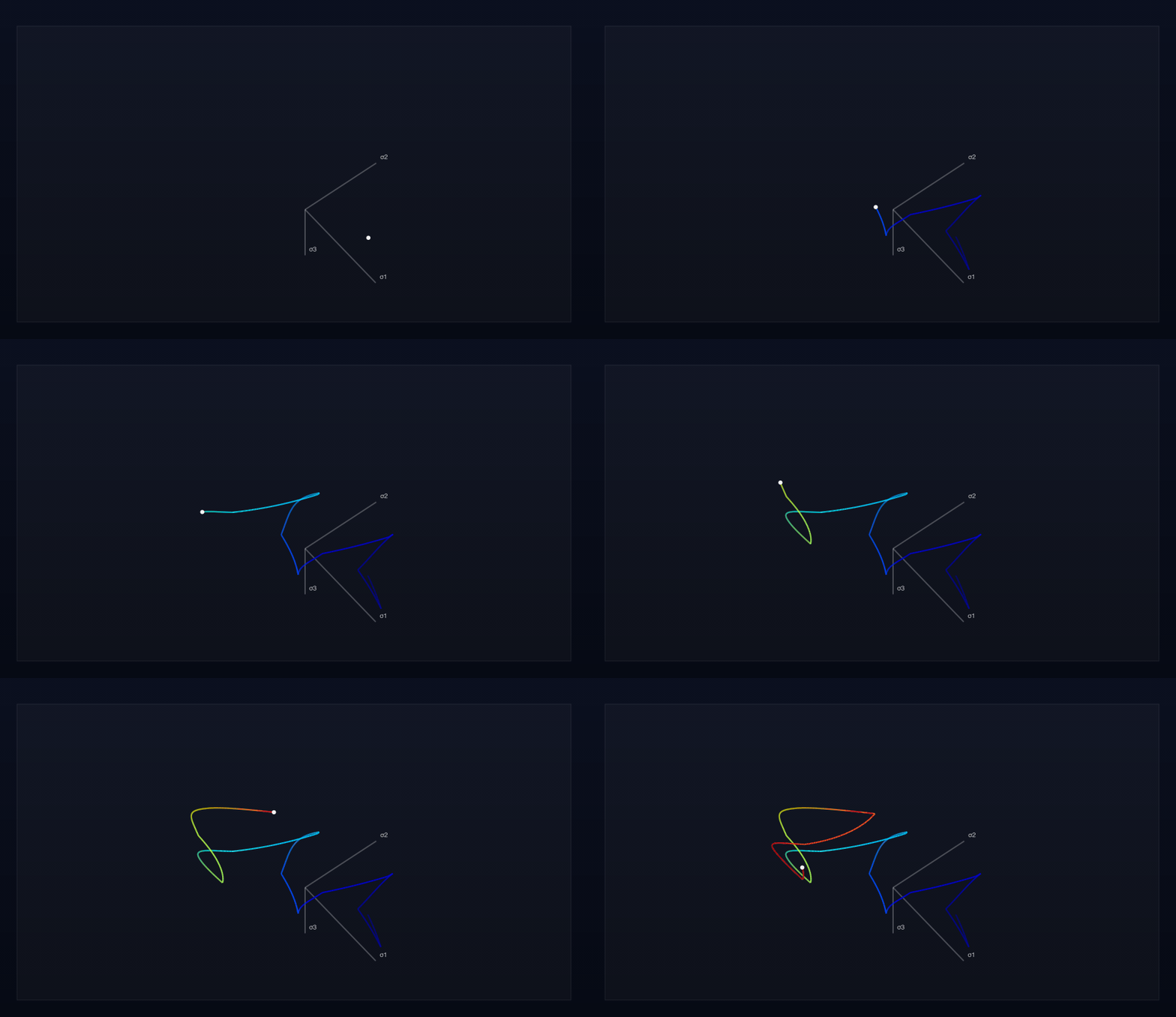
- Cyclic and anisotropic soil behavior models, including the SANISAND family
- Hysteretic and advanced soil‑water retention formulations for realistic wetting/drying response
- …and many more
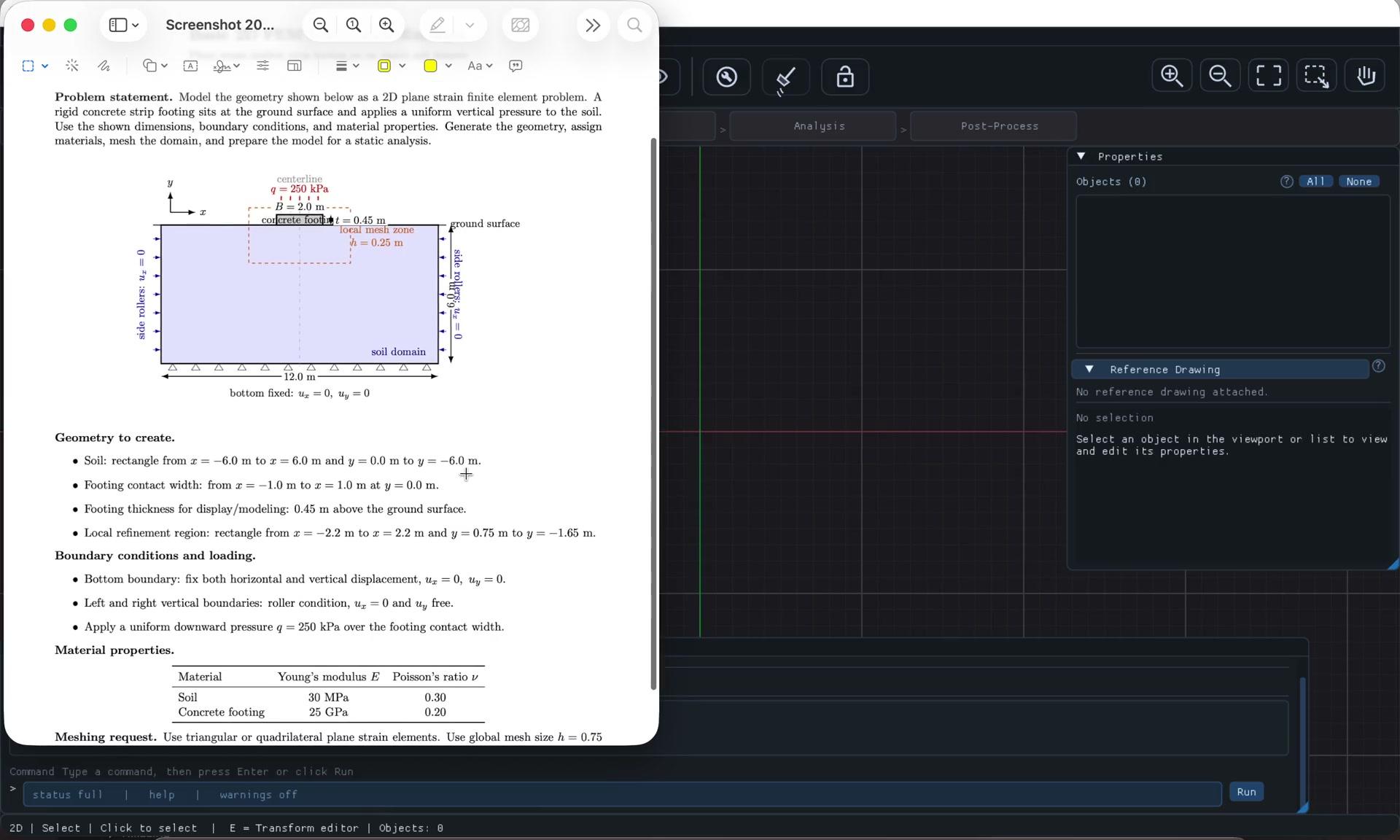
- Problem statement images converted into structured Falcon modeling intent
- Typed command plans for geometry, materials, meshing, boundary conditions, and loading
- Auditable workflow trail that keeps engineer review in the loop
- Path toward autonomous model setup, solve execution, and result validation
Designed for demanding projects
From routine analysis to complex multiphysics—Falcon delivers.
Staged excavation, support sequencing, convergence monitoring, and multi-opening interaction.
Progressive failure, rainfall-induced instability, and large-deformation runout analysis.
Site characterization, parameter sensitivity, and uncertainty quantification for risk-informed design.
Settlement prediction, group effects, and soil–structure interaction in 2D/3D.
Preloading, surcharging, stabilization efficacy, and long-term performance.
Earthquake response, pore-pressure buildup, and full transient-to-dissipation cycles.
Built by geotechnical engineers & software experts
Falcon is developed by a team with deep expertise in both geomechanics and software engineering. We understand the challenges of real engineering practice—from the need for reliable convergence in complex models to the importance of clear, auditable workflows that stand up to review.
We’re working with advisors and early testers across civil/geotech practice and research. If you’re running complex staged models, multiphysics simulations, or pushing the boundaries of what’s possible with current tools, we want your feedback to shape Falcon’s development.
Answers upfront
If you’re evaluating tools for critical geotechnical decisions, these are the questions you should ask.
We’re pre-launch. The beta is rolling—approved testers get access as features stabilize. We’ll share timelines by email.
Pre-launch pricing is by early access. Beta is free for approved testers. We’ll offer Academic, Professional, and Enterprise options.
We’re targeting Windows, Linux, and macOS. Cloud execution is on the roadmap for enterprise workflows.
Yes—Falcon supports both 2D and 3D workflows so you can choose the right fidelity for the decision and timeline.
Yes—Falcon supports dynamics plus coupled and fully coupled workflows, including runs that span transient response through consolidation and dissipation.
Yes—Falcon includes contact and interface modeling, plus multiphysics coupling for problems where interaction across boundaries governs response.
We’ll support common mesh and data export formats and keep integrations pragmatic. Tell us what your team needs during beta.
We treat project data as sensitive. You can keep all models and data local on your machine.